Final meetings with the graduates and the newest students. They have an afternoon conference, and requested the topic of “protecting the environment.” Right up Floyd’s alley, he jumped into an explanation of the key pillars of sustainability, and challenged the students to come up with ways they could reduce/reuse/recycle. He holds up a plastic bottle. “What are all the ways you could reuse this bottle?” One student starts with “you can make a child’s toy out of it...” and then the room erupts into one creative idea after another. After 45 minutes, we release them, but they refuse to go, huddling around Floyd, asking question after question. I tell him afterward that he’s made a real difference, and these students will remember him. Cool beans. Stay tuned.

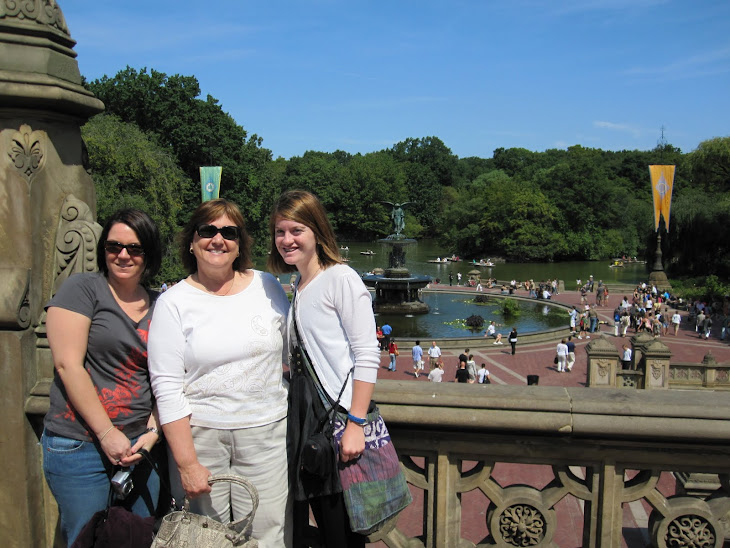
 Today — visits to maternity units to assess need for a mother-baby health certificate. Roseanne — pictured with me here — is the head midwife in a busy maternity unit. As a result of her clinic’s public health efforts, nearly 98% of women deliver in a facility and mortality rates have dropped dramatically. So far this year, 4 neonatal deaths and one maternal death — a quarter of what it was a year ago. The facilities are spare but clean. In discussion about an appropriate curriculum, the differences quickly become apparent. Roseanne tells me one of their biggest challenges is dealing with the amount of scar tissue that Somalian women present with due to genital mutilation; sometimes, she says, it is so thick the baby can’t be delivered without surgery. She speaks of the challenges of blending cultural traditions with modern healthcare. Some of the women refuse to wash the baby after birth, instead insisting on covering them in oil. Others believe they cannot breastfeed until they are blessed by a shaman, who may not visit for several days after birth. The first product of breast-feeding, when the most immunity is passed to the baby, is often drank by the husband. (I’m trying to be culturally sensitive here, but ick...). She is excited by the prospect of having trained public health workers who can support the work she is doing in the maternity ward. “They need to be custodians of their health,” she says, “but they need someone to walk with them. This isn’t just about births; it’s about having healthy futures for all our children.” She then asks me if I want to look at her “indicators,” the statistics about complications, birth outcomes, and volumes. Hence — the data come first in this post. I’m impressed, and I admire her passion and the outcomes she’s achieved. I tell her so, and she blushes. Stay tuned.


 In the refugee camp for two days now. I’ve never been fond of taking pictures to show how bad it is, but the second sign here pretty much sums it up....



 The morning starts with home visits with the local environmental scientist -- the Ethiopian version of a public health worker. His mission: to get each home to dig a latrine so that their drinking water is not contaminated with waste. We drive off the main road, then get out and walk, the mud sucking at our shoes. The first home is considered a model of environmental responsibility. They've not only dug a latrine, they've dug trenches to capture methane from their livestock's dung to use as cooking fuel. Wow, just writing that makes me realize how different life is here. They are gracious and in the midst of a coffee ceremony; they ask us questions about our homes, where we get water, where we keep our livestock. We walk on, to another home, where the owner looks at us sheepishly. She is in the midst of stocking her still, making corn whiskey. We ask her where she sells it. "In my living room, here," she responds. Ahhh, so we are in a bar! No wonder she can afford to have a three room house.
 The students continue their work, doing physicals, treating kids and faculty, working at the hospital. In the evening, we ask about their reaction to the experience. They have the same questions I ask myself. "Am I doing any good here? Can the little bit we do actually help in any way?" I remind them that we don't call these helping trips, or charity - we call them service learning. We're here to serve and to learn in equal parts. I'm reminded of Matt's chemistry lecture. When substances meet up, sometimes hydronium ions go one way, sometimes the other way, sometimes both ways. The arrows here go to and from our students to those they serve, and it won't always balance out. We end the evening with another chemistry experiment -- Gina has attempted to make cookies for Jen's birthday using oatmeal, peanut butter, and peanut M&M's. We considered the experiment a success. Back to pack tonight, to that long, long trip back over the pond. This adventure is coming to a close. Until the next one...stay tuned.
 "This stuff will burn your eyes out!" he admonishes the rambunctious students. The students compete to answer questions, with gusto if not accuracy. Mid-afternoon, Jeremy and I visit the community schools that Regis helped Project Mercy build for students who can't get into the private school. We start to leave just as students move between classes, and they mob us -- a couple hundred of them all try to shake my hand. I know how a politician must feel. Tomorrow, we go on home visits into the straw huts called tukels. I sense that will be another completely novel experience. Stay tuned.
 sleep of someone on anti-malarials. We work tomorrow; stay tuned.

 -- heart valve replacement for $2400 in India, spinal surgery for $1200 in South Africa. He adopted two twins with massive spine deformities in order to get them on his health insurance. "Take that, Aetna," he said, with a jab in the air. He ended up with five kids as a result. All are healed and successfully being educated in the U.S. One wants to become a pharmacist. I tugged on his sleeve on that one. "We have one great pharmacy school, " I told him. He promises to check us out. Tomorrow we are up and out to Project Mercy, which will take most of the day. I hear it's a beautiful drive; stay tuned.

 uta takes them all in, educates them, provides them with shelter, protects them from abusers, and gives them the therapy they need. We watch three interpretive dances from the dance therapy class -- these were some talented young people, their dances were moving and hopeful. It was followed by circus therapy -- yes, you have that right. Tumbling, jumping, scaring us all that they would fall off the mattresses that served as their mats. We toured the compound, where women are taught to sew, children are schooled, illnesses are treated, and souls are soothed. Our students' work was evident everywhere -- charts on the wall helping the kids understand how to stay well, and showing their parents what normal development should be. Once again, I am struck by the resilience of children and the generosity of strangers. Yuta had us to her home for lunch, an elaborate and gracious affair complete with china, four courses of wonderful food, and great conversation. I asked her what inspired her to do this work. "Have you looked around here?" she responded simply.
Will meet with Dr. Rick Hodes tonight, and since the only internet I have is here in the hotel, may post before we leave for Project Mercy tomorrow. Stay tuned.
uta takes them all in, educates them, provides them with shelter, protects them from abusers, and gives them the therapy they need. We watch three interpretive dances from the dance therapy class -- these were some talented young people, their dances were moving and hopeful. It was followed by circus therapy -- yes, you have that right. Tumbling, jumping, scaring us all that they would fall off the mattresses that served as their mats. We toured the compound, where women are taught to sew, children are schooled, illnesses are treated, and souls are soothed. Our students' work was evident everywhere -- charts on the wall helping the kids understand how to stay well, and showing their parents what normal development should be. Once again, I am struck by the resilience of children and the generosity of strangers. Yuta had us to her home for lunch, an elaborate and gracious affair complete with china, four courses of wonderful food, and great conversation. I asked her what inspired her to do this work. "Have you looked around here?" she responded simply.
Will meet with Dr. Rick Hodes tonight, and since the only internet I have is here in the hotel, may post before we leave for Project Mercy tomorrow. Stay tuned.
 I'm ready to hit the road again. Headed to Ethiopia to spend time with our students and faculty at the Mother/Baby clinic in Addis Ababa and Project Mercy in Yetebon.
As usual, Gus is forlorn. I swear he knows what luggage is for. He'd love to go with me, as you can see.
Embarking on a very long flight, hoping I avoid the pediatric ward, which has been the running theme throughout my travels.
I've heard so many things from students, staff, and faculty about this lovely country. I hear it gets its hooks in you and makes you want to return again and again, that it is a beautiful place with gracious people, and that there is much work to do. I'm ready -- to remind myself how lucky I am, to realize how petty my problems are, to remember why we are here and do what we do.
Just a note of warning -- I understand I may likely have wifi only a couple of times during the trip. If you join the blog -- on the main page -- it will send you a note when I get a post up. Plus, it makes me look popular, and that's what's really important here. Stay tuned.
I'm ready to hit the road again. Headed to Ethiopia to spend time with our students and faculty at the Mother/Baby clinic in Addis Ababa and Project Mercy in Yetebon.
As usual, Gus is forlorn. I swear he knows what luggage is for. He'd love to go with me, as you can see.
Embarking on a very long flight, hoping I avoid the pediatric ward, which has been the running theme throughout my travels.
I've heard so many things from students, staff, and faculty about this lovely country. I hear it gets its hooks in you and makes you want to return again and again, that it is a beautiful place with gracious people, and that there is much work to do. I'm ready -- to remind myself how lucky I am, to realize how petty my problems are, to remember why we are here and do what we do.
Just a note of warning -- I understand I may likely have wifi only a couple of times during the trip. If you join the blog -- on the main page -- it will send you a note when I get a post up. Plus, it makes me look popular, and that's what's really important here. Stay tuned.